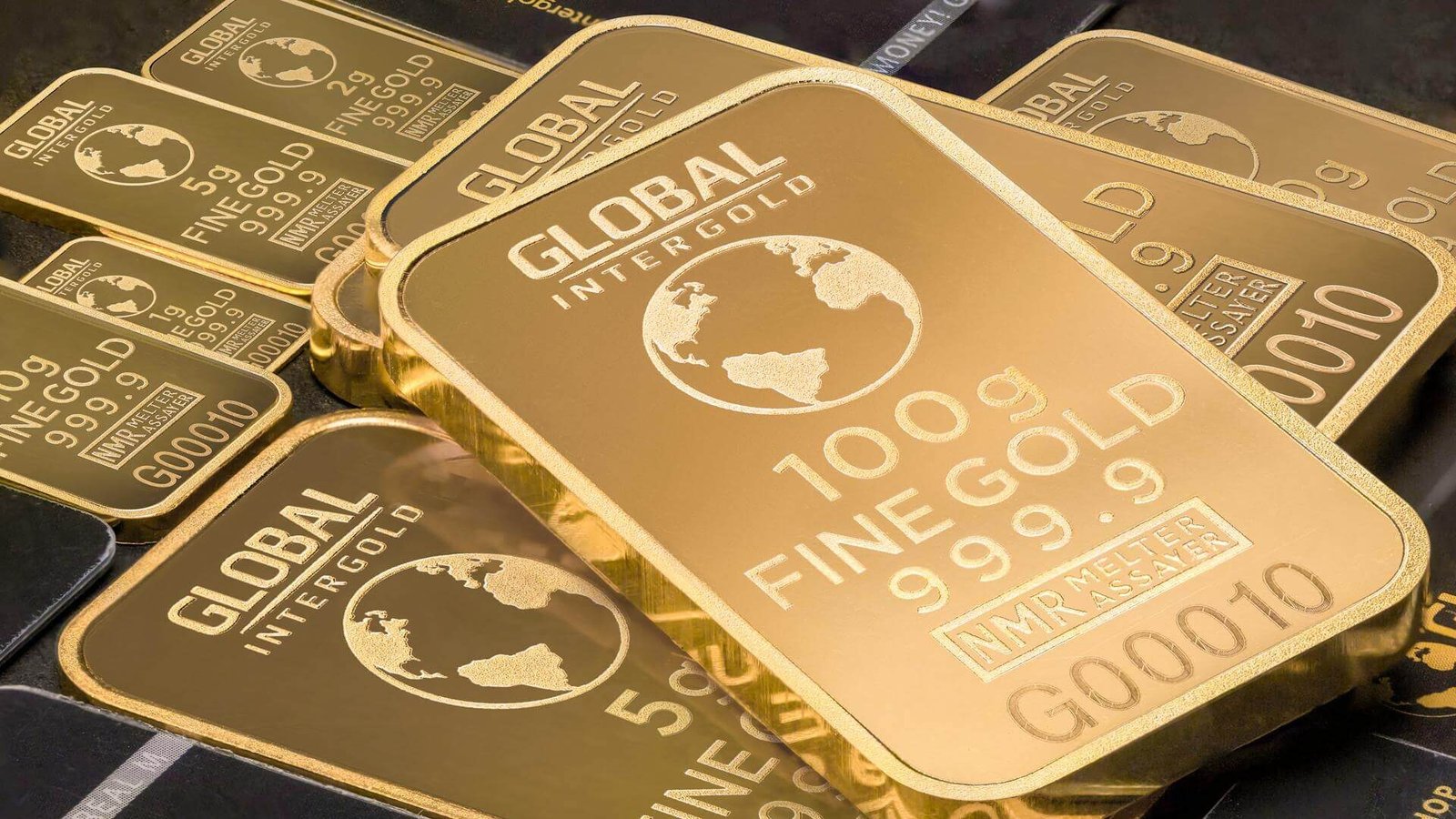

Gold is often described as a “safe investment.”
But if we return to the definition we established earlier:
An investment is capital that generates regular and predictable income.
Gold does not do that.


It does not produce cash flow.
It does not generate income.
It simply sits and changes price.
By that definition:
Gold is not an investment.
The same applies to silver, copper, and most commodities.
So why do investors still care about them?
Why Gold Has Always Been Valuable
Gold has played a unique role throughout human history.
It has been used for:
- storing wealth
- trade and exchange
- symbolic and religious purposes
All the gold ever mined could fit into a cube roughly 22 × 22 meters.
That scarcity is one of the main reasons gold has always held value.
Across different civilizations:
- Ancient Egypt used gold as a symbol of the sun
- Some societies used gold as money
- Others used silver as a standard
Even cultures that had no contact with each other often arrived at the same conclusion:
Gold is valuable.
From Gold Standard to Modern Money
For most of modern history, currencies were tied to gold.
This meant:
- every dollar represented a fixed amount of gold
- people could exchange money for gold
This created trust in the system.
However, the system had a major limitation:
there was not enough gold to support economic growth.
After major crises like:
- World War I
- The Great Depression
- World War II
governments needed more flexibility.
In 1971, the gold standard was officially abandoned.
Since then, we use fiat money — currency backed by governments, not gold.
This allowed faster economic growth, but also introduced new risks like inflation.
Commodities and Modern Markets
Today, commodities like:
- gold
- oil
- steel
- wheat
are traded on large exchanges such as:
- Chicago Mercantile Exchange
These markets allow:
- companies to secure raw materials
- investors to gain exposure to commodity prices
For producers, this is essential.
For speculators, it becomes an opportunity.
The Problem: Speculation vs Investing
When something becomes easy to trade, speculation follows.
Large players:
- have better information
- have more capital
- can influence markets
Small investors usually do not.
That creates a major disadvantage.
This is why:
commodity trading is not suitable for beginners.
It behaves more like speculation than investing.
Is Gold a Protection Against Inflation?
Gold is often described as a hedge against inflation.
Sometimes, this is true.
But the relationship is not consistent.
There is no perfect correlation.
For example:
- inflation may rise
- gold may rise… or fall
Timing becomes the key problem.
If you buy too early or too late, the protection disappears.
The Timing Problem
Unlike bonds or savings, gold does not provide predictable returns.
You must:
- choose the right moment to buy
- choose the right moment to sell
Even professional investors struggle with this.
If timing is difficult for experts, it is even harder for beginners.
When Gold Actually Makes Sense
Gold can have a role, but only in specific situations:
1. Economic uncertainty
During crises, some investors move into gold.
2. High inflation environments
Gold can sometimes preserve value.
3. Political instability
In unstable regions, gold can act as a store of wealth.
In extreme cases, it protects not just value — but access to wealth.
Should You Own Gold?
For most people:
- early in their financial journey
- building income and savings
- focusing on long-term growth
gold is not necessary.
Better focus on:
- career growth
- saving
- long-term investments
Gold does not build wealth.
It can only preserve it — and even that is uncertain.
What We Learned
- Gold is not an investment because it does not generate income
- It has historical importance as a store of value
- Modern economies no longer use the gold standard
- Commodities are widely traded through global markets
- Gold can act as a hedge in some situations, but not reliably
- Timing is extremely difficult and often unpredictable
- For most investors, gold should not be a core strategy